Traditional Guatemalan food is Maya cooking with Spanish additions: corn, black beans, squash, chilli and tomato, plus chicken, beef and pork. Start with pepian, the stew often called the national dish, or kak’ik, a spiced turkey soup. Order tamales on a Saturday, eat the big meal at midday from a small comedor, and keep dinner light. Below: how meals run, eight dishes with price bands, market timing, etiquette and a short Spanish menu guide.
How meals work in Guatemala
Guatemalans eat three meals, and lunch is the largest. Breakfast (desayuno) is early, often 06:30 to 08:00, and based on eggs, black beans, fried plantain, fresh cheese and warm tortillas. Lunch (almuerzo) runs from about 12:00 to 14:00. Dinner (cena) is lighter and earlier than in Spain or Mexico, frequently around 19:00, and may be tamales, beans or a sweet bread with coffee.
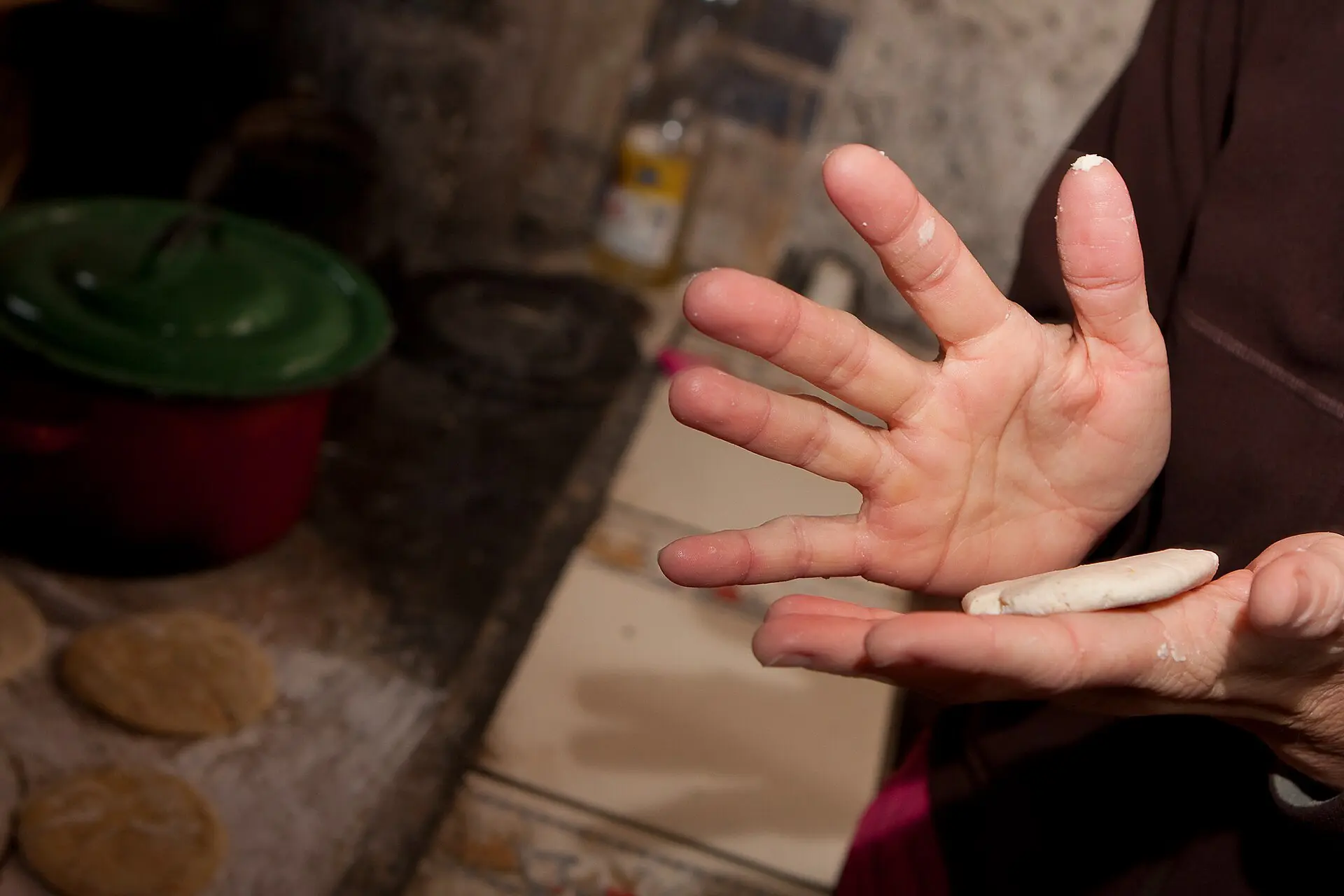
Corn is the base of the food system. Maize is soaked in lime, ground into masa and made into tortillas, tamales and the thick drinks called atol. Black beans (frijoles negros) come at nearly every meal, as a paste, whole or fried. Wherever a Guatemalan meal lacks tortillas, someone will ask where they are.
The Maya inheritance is visible in the sauces. Many stews are thickened with ground toasted pumpkin and sesame seeds rather than flour, and flavoured with dried chillies, tomatillo and herbs. The Spanish brought chicken, pork, beef, onions and garlic, and the two traditions merged into the stews below. Wikipedia notes the country’s Maya core and its Spanish conquest, and the cooking reflects both.
Market timing for traditional Guatemalan food
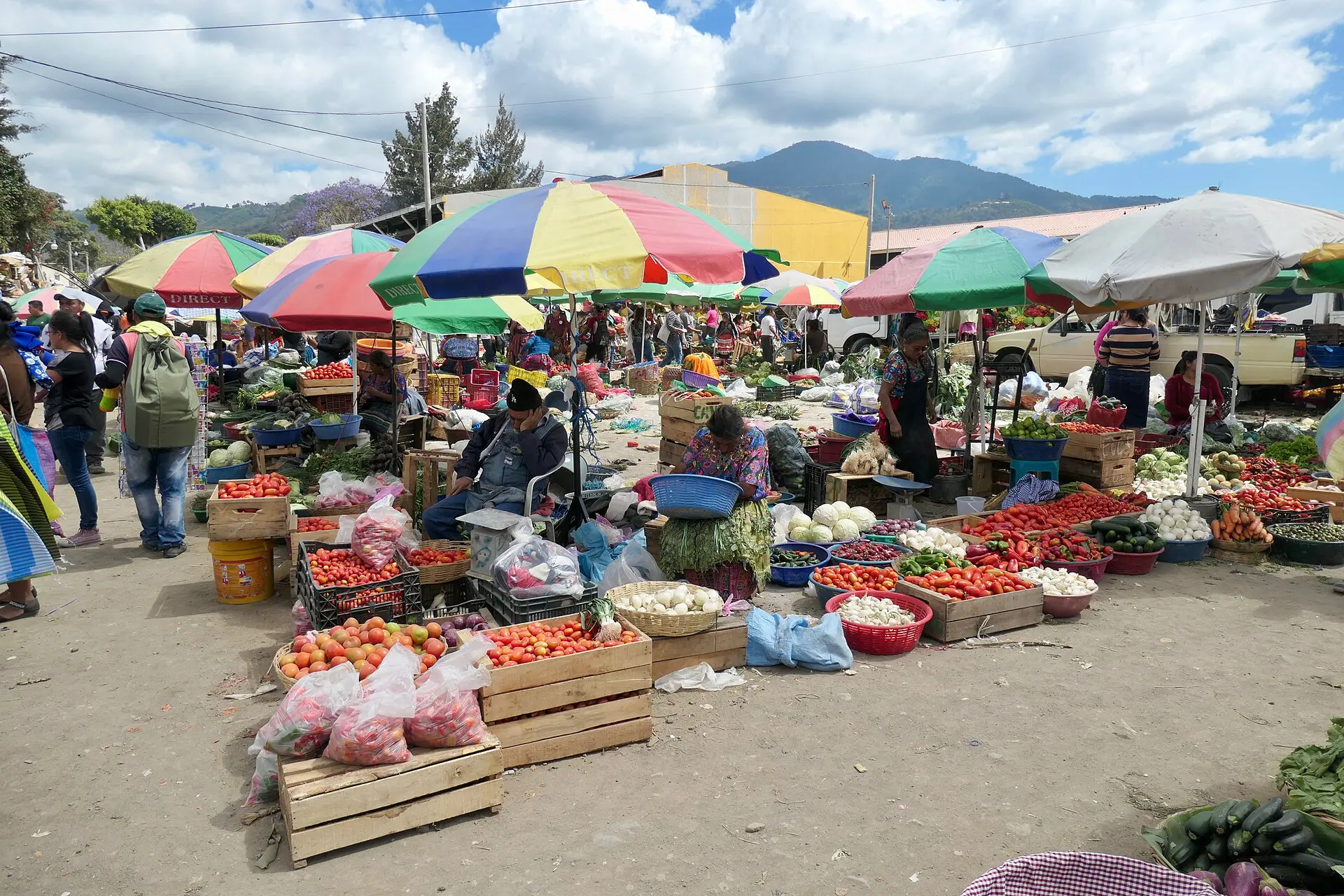
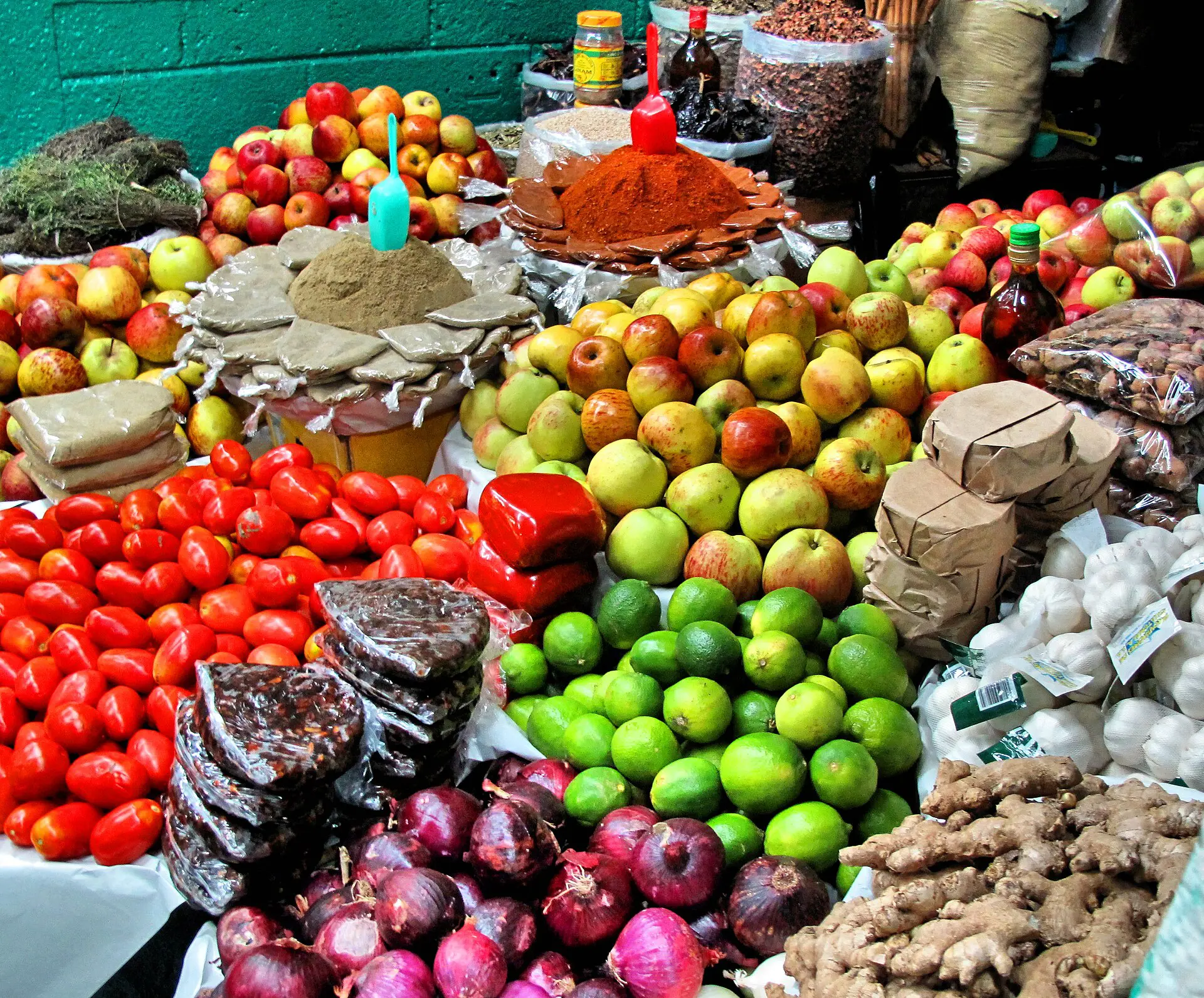
Markets are the best place to see how traditional Guatemalan food reaches the plate: corn, beans, chillies, squash and herbs arrive each morning from nearby farms. Highland towns hold weekly market days, and the big ones draw vendors from surrounding villages in traditional dress, selling by the handful. Chichicastenango is a well-known example, with market days traditionally on Thursday and Sunday. Check current days before you go.
| Time | Where | What to order |
|---|---|---|
| 05:30-08:00 | Municipal market comedores | Desayuno tipico, coffee, atol de elote |
| 11:30-14:00 | Market food halls and family comedores | Set lunch, stews, soup of the day |
| Saturday afternoon | Neighbourhood tamale sellers | Tamales colorados, chuchitos |
| 17:00-20:00 | Street stalls and plazas | Tostadas, elote, rellenitos |
Produce is freshest before 10:00, and market meals are often finished by mid-afternoon. Carry small notes and coins, since vendors rarely have change for large bills. Prepared food moves fast: the soup pot of the day is usually empty by 14:00, so a late lunch means a narrower choice.
8 traditional Guatemalan dishes to order
Prices are hedged bands in quetzales (GTQ), as of 2026, and vary by town and tourist exposure. Check the menu before you sit.
1. Pepian
Pepian is a thick, brick-red stew of chicken, beef or pork cooked in a sauce of roasted tomatoes, dried chillies, and toasted pumpkin and sesame seeds, often served with rice, tortillas and vegetables such as green beans and squash. It is a dish that belongs to Maya and Spanish history together, and it is widely treated as a national dish. Order it at lunch. Price band: roughly 35-70 GTQ.
2. Kak’ik
Kak’ik is a turkey soup from the Q’eqchi’ Maya of Alta Verapaz, with a red broth coloured by chillies and achiote and scented with cilantro. The turkey comes in large pieces on the bone, and the soup is usually served with a tamal or rice on the side. It is spicy but not harsh. Cooks make it in a pot for a crowd, so it is a good meal for sharing. It is also a festival and family-gathering dish in the highlands north of Guatemala City. Price band: roughly 40-80 GTQ.
3. Tamales
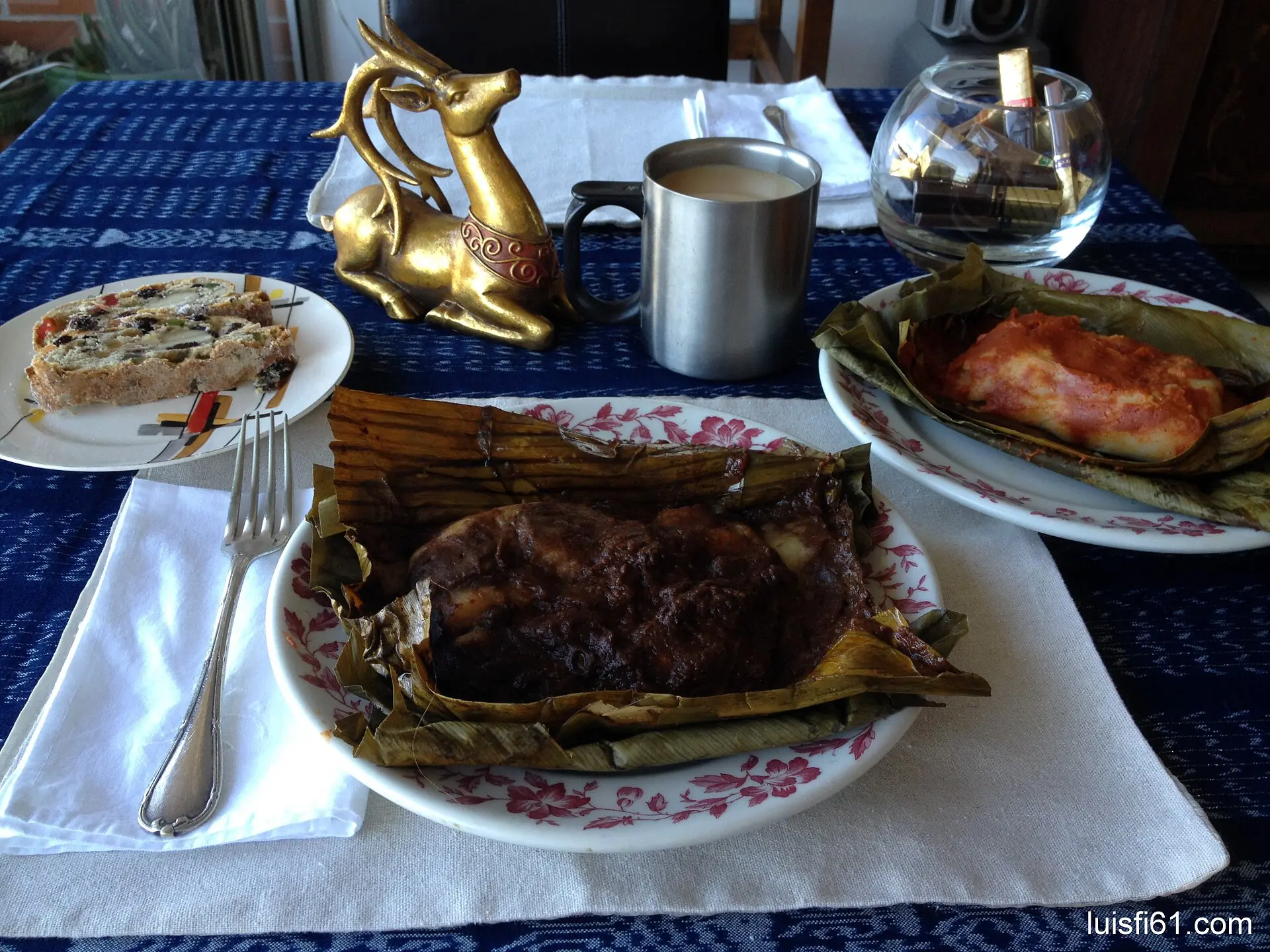
Guatemalan tamales are wrapped in banana or plantain leaf, not corn husk, and filled with a smooth masa stuffed with meat in a red sauce, olives, raisins or prunes. Chuchitos are smaller, firmer and wrapped in corn husk. Black tamales and paches (made with potato) also appear. Saturdays are the traditional tamale day, and Christmas has its own ones. Price band: roughly 5-15 GTQ each.
4. Jocón
Jocón is chicken stewed in a green sauce made from tomatillo, cilantro and green chilli, thickened with ground sesame and pumpkin seed. It is milder than pepian and bright in colour. It is served with white rice and tortillas. Jocón is a home-style Sunday dish, and it is easier to find in family comedores than in tourist restaurants. Price band: roughly 35-65 GTQ.
5. Hilachas
The name means shreds, and it refers to beef boiled until it falls apart, then simmered in a tomato and chilli sauce with potatoes and carrots. It is everyday family cooking, sold at lunch with rice and a stack of tortillas. A good version has a thick, glossy sauce. Order it if you want something comforting and not too spicy. Price band: roughly 35-60 GTQ.
6. Desayuno tipico
The traditional breakfast plate holds eggs, black bean paste, fried plantain, a slab of fresh cheese or cream and tortillas, with coffee. It is the best-value meal in the country and fills you until mid-afternoon. The beans are cooked down and fried until smooth, the plantain is ripe and sweet, and the cheese is salty and fresh, so the plate balances itself. Order it at a market comedor, not in a hotel. Add chirmol, a tomato salsa, if it is on the table. Price band: roughly 20-45 GTQ.
7. Fiambre
Fiambre is a cold salad of pickled vegetables, cured meats, cheese, sausage and sometimes fish, made with dozens of ingredients and eaten on 1 November, All Saints’ Day, when families visit cemeteries. It is a once-a-year dish and a distinctly Guatemalan one. If you travel then, you can find it in markets and homes. Price band: roughly 40-90 GTQ a portion, depending on size.
8. Rellenitos and atol
Rellenitos are balls of mashed plantain filled with sweetened black beans, fried and dusted with sugar. Atol de elote is a warm, sweet corn drink thickened with masa, drunk in the morning or evening. Together they are the standard sweet snack. They appear at street stalls and in markets from late afternoon. Price band: roughly 3-12 GTQ.
Price bands: what does a meal cost in Guatemala?
Local food is among the cheapest in the region. Hedged ranges per person, as of 2026:
| Meal | What | Typical band |
|---|---|---|
| Breakfast | Desayuno tipico with coffee | 20-45 GTQ |
| Set lunch | Soup, main, rice, tortillas, drink | 25-50 GTQ |
| Street snack | Tamal, tostada, rellenito | 3-15 GTQ |
| Tourist-town dinner | Stew with drink | 60-120 GTQ |
Prices in Antigua Guatemala and around Lake Atitlan are higher than in small towns. Check the exchange rate, as the quetzal is worth roughly one-eighth of a US dollar.
Etiquette at a Guatemalan table
- Greeting: say “buen provecho” when you pass a table or leave one where people are eating. It is polite, and it is returned.
- Tortillas: they come wrapped in a cloth. Tear a piece and use it to scoop stew, and do not leave them uneaten.
- Tipping: a tip of around 10 percent is common in sit-down restaurants. Check whether the bill includes it. At market comedores, rounding up is enough.
- Hospitality: if you are offered coffee or food at someone’s home, accept at least a little.
- Water: most visitors use bottled or filtered water, including for brushing teeth.
How to read a menu in Guatemala
Menus are in Spanish, and English appears in tourist towns. Learn a handful of words. Desayuno is breakfast, almuerzo is lunch, caldo is soup or broth, pollo is chicken, res is beef and cerdo is pork. Menu del dia is the set lunch, the best deal on any board.
Say “sin picante” for no heat, or ask for the chilli sauce on the side. A comedor is a small family eatery, with a list on a whiteboard. La cuenta, por favor asks for the bill. For regional context, see the Guatemala travel guide, and for background see Wikivoyage’s Guatemala guide.
What to skip when eating traditional Guatemalan food
- Raw salads and cut fruit washed in tap water, unless the place is clearly careful.
- Ice in drinks at small stalls, if your stomach is sensitive.
- Pepian or kak’ik that has sat in a pot all afternoon. Eat stews at lunch.
- Restaurants with an English-only menu and no local customers. Walk to the market instead.
- Fast-food chains, which are common in cities and offer nothing you cannot eat at home.
FAQ about traditional Guatemalan food
What is the national dish of Guatemala?
Pepian is the dish most often given that label. It is a spiced stew of meat in a sauce of roasted seeds, chillies and tomato. Kak’ik, the turkey soup from Alta Verapaz, is also widely recognised as a cultural symbol.
Is Guatemalan food spicy?
Mostly mild. Chillies are used for flavour in the cooking, while heat comes from salsas and sauces added at the table. Kak’ik has more kick than pepian or jocón. You can say “sin picante” and add the salsa yourself.
Is Guatemalan street food safe?
Many visitors eat it without trouble if they choose busy stalls and food cooked hot in front of them. Avoid raw items washed in tap water and ice from unknown sources. If you have a sensitive stomach, start with cooked dishes and bottled water.
What do Guatemalans eat for breakfast?
The standard plate is eggs, black beans, fried plantain, fresh cheese and tortillas, with coffee. A lighter version is sweet bread and coffee. Atol de elote is the traditional hot drink. A desayuno tipico is cheap, filling and a good way to start a day of travel.
Can vegetarians eat well in Guatemala?
Yes, with some care. Black beans, eggs, cheese, tortillas, plantain, avocado, rellenitos and vegetable soups are everyday food. Many stews and tamales include meat, and beans may be cooked with lard, so ask. Markets are the easiest place to build a meal.