The best hikes in the Catskills are Slide Mountain for the highest summit, Overlook Mountain for the fire tower and ruins, and Kaaterskill Falls for a short walk to a big waterfall. The range is a dissected plateau, so trails are steep, rooted, rocky and often wet. Distances look short; the climbing is not. Below are ten routes with effort, trailhead problems and a fallback for each, ordered roughly from hardest summit to easiest outing.
Getting to the Catskills
You need a car for most trailheads. From New York City, Kingston is about 2 hours by road, and Slide Mountain about 2.5. Public transport is limited: intercity buses run from Manhattan to Woodstock, Phoenicia, Hunter and other towns, and Amtrak serves stations on the Hudson such as Rhinecliff and Hudson, but you still need a taxi or a car from there. Check current timetables before you plan a one-way hike.
Fuel, parking fees and tolls are the main costs, so budget roughly 40 to 100 USD for a day-trip car journey from the city, as of 2026. Read the regional overview on Wikivoyage’s Catskills page for towns and access roads.
What it is like there
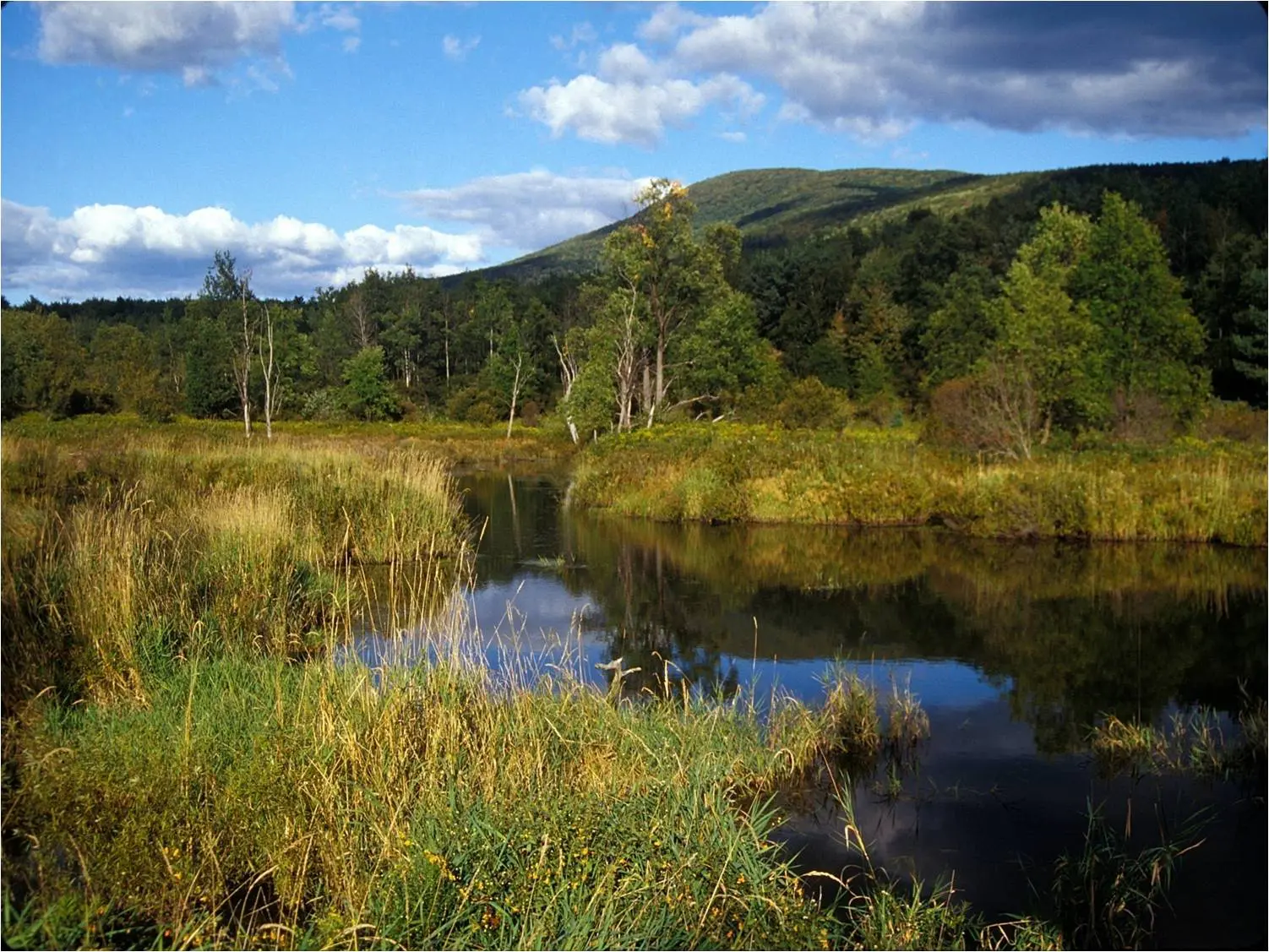
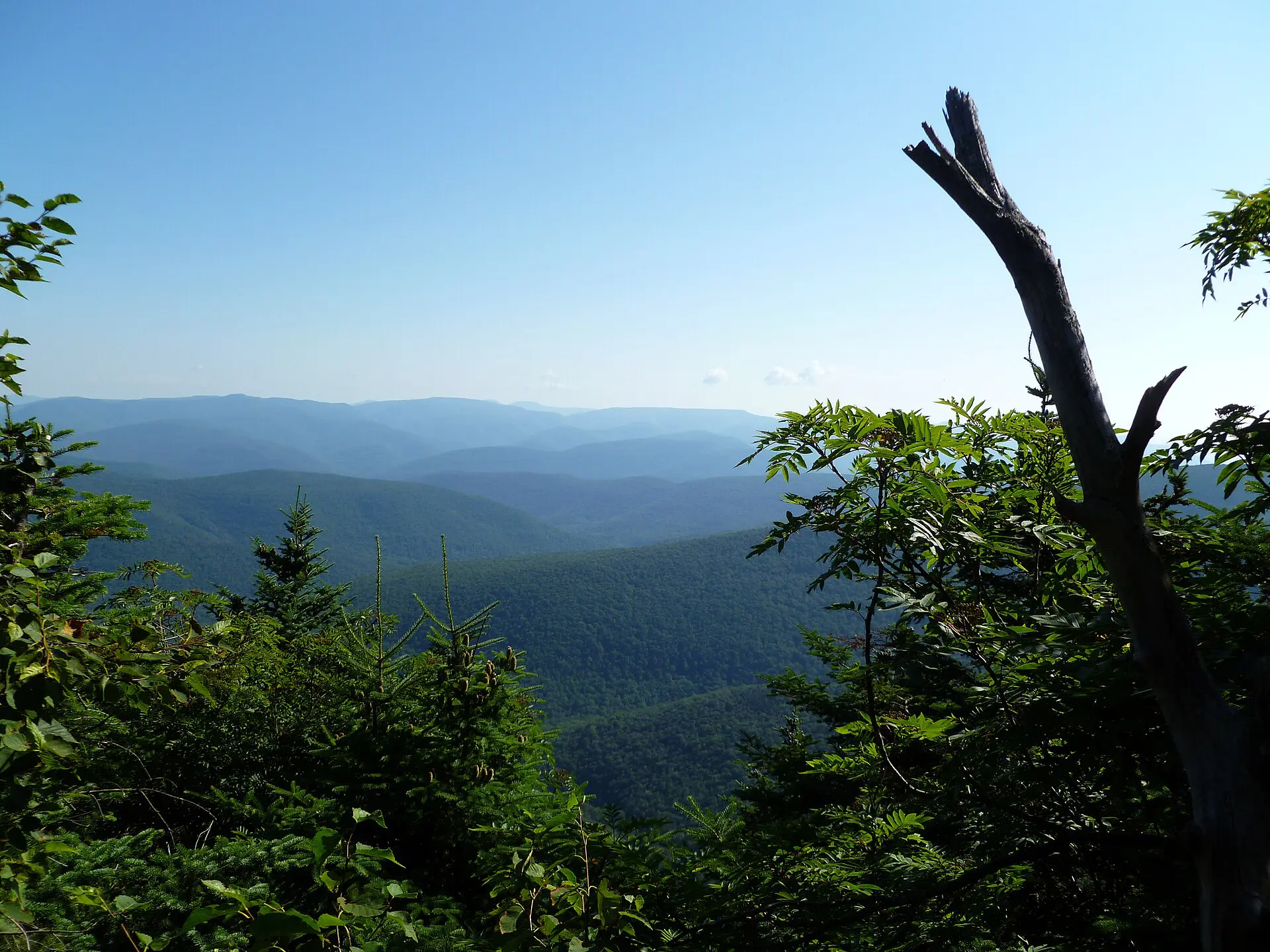
The Catskills sit mostly in Catskill Park and the state Forest Preserve, with trails marked by coloured discs. Terrain is forested ridges, ledges and steep stream valleys. Trails are often muddy, and rocks and roots stay slick for days after rain. Phone coverage is unreliable on many routes. Crowds concentrate at Kaaterskill Falls and on summer and autumn weekends; most other trails are quiet on weekdays. Water on the trail should be treated before drinking.
Best time to go
Late May to October is the main season. June brings biting insects and ticks; September and early October bring cooler air and colour, and also the heaviest weekend crowds. Mud season runs through March and April. Winter hiking needs traction devices, insulation and navigation skills, because summits can be icy while valleys are bare. Check the forecast for the summit, which can be several degrees colder than the road.
What to do and see
1. Slide Mountain
The highest peak in the Catskills at about 1,274 m. The standard route from the Slide Mountain trailhead on Route 47 is roughly 11 km return with around 600 m of climbing, steady and rocky, with a view ledge near the top. Allow 5 to 6 hours. Parking is limited, so arrive early. Skip it in icy conditions unless you carry spikes.
2. Overlook Mountain
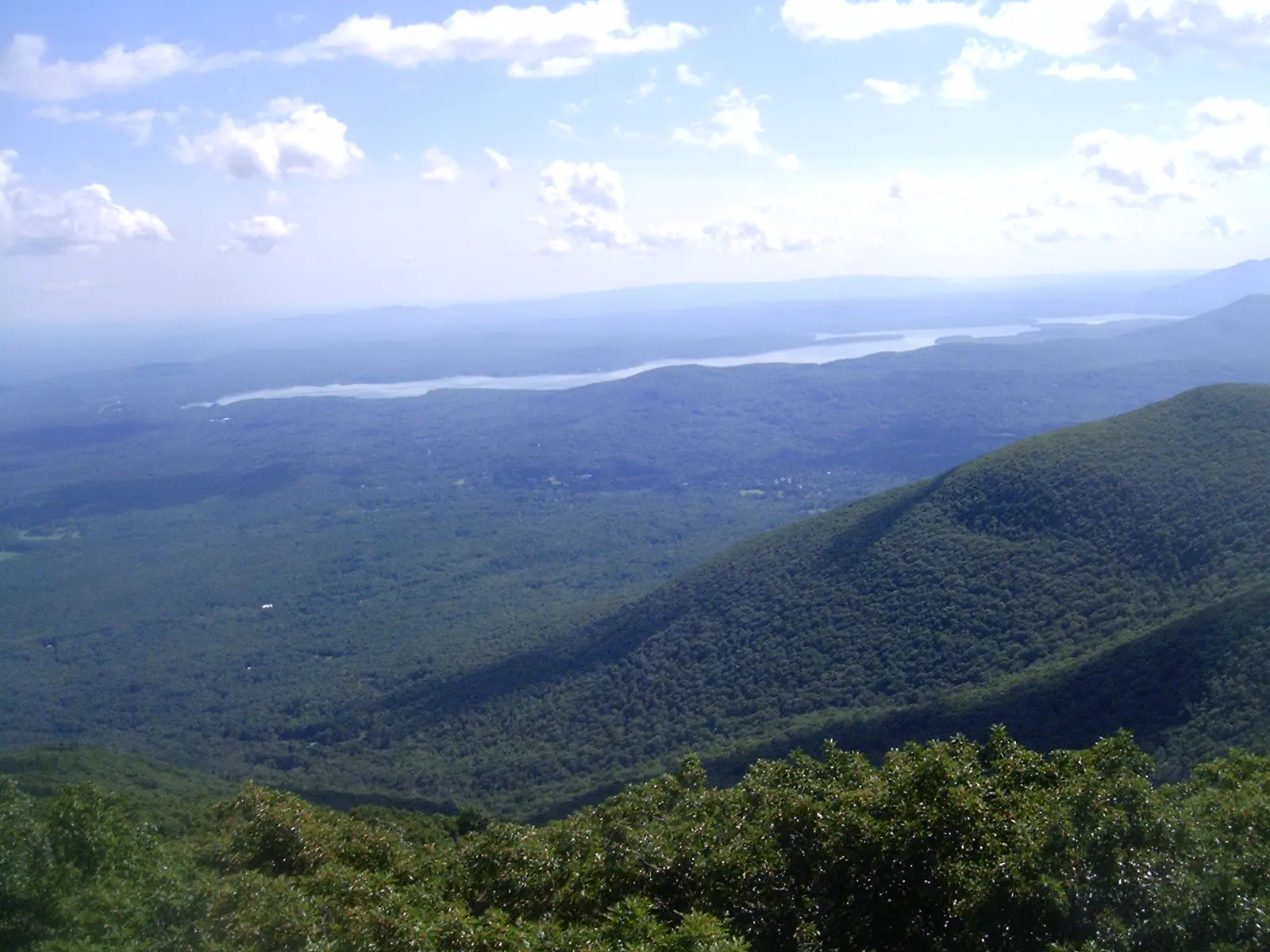
This is a wide old carriage road that climbs steadily from near Woodstock to a fire tower and the ruins of a hotel. Expect about 8 to 9 km return and roughly 2 to 3 hours each way. The tower gives a wide view over the Hudson valley. Bears, rattlesnakes and ticks all occur here, so stay on the path and check your clothes afterward. A good first mountain.
3. Hunter Mountain
The second-highest peak in the range carries a fire tower on its summit. The route from Spruceton Road is around 10 km return and a long steady climb, quiet except at peak weekends. The tower gives the best view of the range. There is also a ski resort with a chairlift and different trailheads, but the hiking approach from Spruceton is more honest. Allow 4 to 5 hours.
4. Kaaterskill Falls
A two-tier waterfall of about 80 m, among the highest in New York. A short trail with steps leads from the lower parking area to the base, about 1 km each way, and a longer route continues to the top. It is the most crowded hike in the range. The rock around the falls is slippery and people have died here, so stay behind barriers and do not climb the falls. Parking is limited; arrive early or visit on weekdays.
5. Giant Ledge and Panther Mountain
Giant Ledge is a short climb of roughly 5 to 6 km return to cliff-edge views, and Panther Mountain is the extension if you want more. It is one of the best effort-to-view ratios in the Catskills. The ledges are exposed with steep drop-offs, so keep children close. The trailhead is on Oliverea Road and the lot fills up on fine weekends. Fallback: stop at Giant Ledge and skip Panther.
6. Indian Head and Twin Mountain
Part of the Devil’s Path range, this pair is steep and rocky, with scrambling and hard footing. Distances are modest, but the effort is serious: expect 6 to 8 hours for a loop or traverse. Do not attempt in wet or icy conditions. These peaks are for people who already handle rough ground, not first-timers. Fallback: turn around at the first viewpoint if the rock is wet.
7. Blackhead Range
Three peaks, Thomas Cole, Black Dome and Blackhead, on a long ridge from the north, with open rock and extended views. The traverse is demanding, often 15 km or more, and the descents are rough. Arrange a car shuttle if you plan a one-way route. Water sources are unreliable, so carry enough for the whole day. Rewards experienced hikers; skip it if you want something short.
8. Windham High Peak
Windham High Peak is a moderate climb on the Escarpment Trail near the north end of the range, about 11 km as a loop. The path is graded better than many Catskill climbs. Views are limited compared with the ledges, but the crowds are thin. Good for a quiet mid-effort day. Check the trail conditions after heavy rain.
9. Plattekill Falls
A tall, narrow waterfall reached by a roughly 4 to 5 km return walk through forest. It is less visited than Kaaterskill and offers a pool, though the water is cold. Rocks near the base are slick. This is a decent fallback when the big summits are cloud-covered, because the view does not depend on clear sky.
10. North-South Lake and Artists Rock
The lake area near Haines Falls is a gentle, low-risk option with a lake, a campground and short walks to cliff viewpoints. The state charges a day-use fee in season. It suits families and anyone with a recovering knee. Use it as the bad-weather or low-energy plan, and stay behind the edge at the overlooks.
Safety, rules and practical tips
- Tell someone your route and turnaround time. Coverage is patchy, so download offline maps.
- Carry 2 litres of water, a headlamp, a rain layer and a first-aid kit even on short routes.
- Check for ticks after every hike, particularly from May to August.
- Store food properly in bear country. Do not feed or approach wildlife.
- Follow Forest Preserve rules, including camping limits at higher elevations. Check current regulations before you pitch a tent.
- Never climb on waterfall rock. Most injuries happen on wet stone.
Nearby alternatives
If Catskill parking is full on the best hikes in the Catskills, try the Hudson Highlands or the Shawangunk Ridge, both within a similar drive from the city. The Adirondacks are far bigger but too far for a day trip. Background on the range is on Wikipedia.
Costs
The best hikes in the Catskills are mostly free. Some state sites charge day-use or parking fees, typically a few dollars per vehicle, so check before you go. Camping runs roughly 20 to 35 USD per night in state campgrounds, as of 2026. Lodging in Woodstock, Phoenicia and Hunter varies widely and rises on autumn weekends. A basic day hike costs little beyond fuel, food and a map.
FAQ
What is the best hike in the Catskills for beginners?
Overlook Mountain is a good first mountain: a wide, graded road with a fire tower at the top. Giant Ledge gives better views in less distance but has exposed edges. Kaaterskill Falls is shortest but busy and slippery.
Which Catskills hike has the best views?
Among the best hikes in the Catskills for views, Slide Mountain gives the highest ground, but the fire tower on Hunter Mountain and the ledges on Giant Ledge are often better value. Overlook Mountain has the best view for its effort. Visibility depends on weather, so check the forecast.
Do I need a car to hike in the Catskills?
Realistically, yes. Buses reach some towns such as Woodstock and Phoenicia, but most trailheads are miles from the road. Without a car, hire a taxi, arrange a lift or choose a trailhead close to a bus stop.
Are there bears in the Catskills?
Yes, black bears live there. Encounters are uncommon, but keep food sealed, make noise on the trail and never approach a bear. Hang or store food at night if you camp. Check local rules about bear canisters.
When is the best time to hike in the Catskills?
September and early October offer cool air and good visibility. May to June is greener but brings insects and ticks. Midsummer is hot, and winter requires traction gear and cold-weather experience.